Table of Contents
Getting a massage without speaking Vietnamese is straightforward in central Ho Chi Minh City. Most tourist-facing spas in District 1 handle booking, payment and basic instructions in English. The gaps appear mid-session, around pressure and problem areas. Six or seven prepared phrases, plus one clear hand signal, close almost all of them.
Do spas in Vietnam speak English?
In the tourist core of Ho Chi Minh City, usually yes, at least at reception. Spas around Pham Ngu Lao, Ben Thanh and Dong Khoi serve a largely international clientele, and front-desk staff generally handle bookings, prices, directions and payment in English without difficulty. Therapist English is a different matter. It ranges from fluent to a working set of roughly twenty words: hello, strong, soft, hot, turn over, finished, thank you. That vocabulary is enough for a competent session. It is not enough to explain that one shoulder feels fine while the other locks up after a day at a laptop.
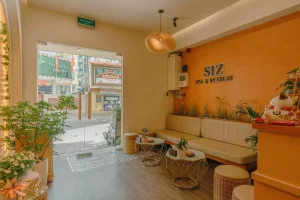
Coverage tracks who the spa was built for. Hotel spas and boutique spas on the traveller circuit invest in English because their business depends on it; neighbourhood shops serving residents often have no reason to. Siz Spa & Retreat, at 154 Cong Quynh Street in the Pham Ngu Lao area, lists English-speaking therapists and private treatment rooms, which removes most of the friction before it starts. Since 1 July 2025 the area has officially been Ben Thanh Ward, having previously been Pham Ngu Lao Ward in District 1. Maps, taxi apps and residents all still recognise the old names, and the post-merger reshuffle of ward names is worth skimming before handing an address to a driver who speaks no English. Showing a saved map pin, rather than reading a street name aloud, avoids the problem entirely.
Where communication actually breaks down
Booking is rarely the problem, and payment almost never is. A menu lists treatments, a card terminal shows a number, and both sides can point. The language barrier at a Saigon spa appears in a much narrower place: the twenty seconds in the middle of a session when something needs to change.
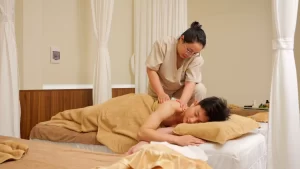
Pressure is the most common failure point. “Strong” and “soft” are not fixed quantities. They are calibrated against whatever a particular therapist treats as normal, and that baseline shifts between spas, between training backgrounds and between individuals. A guest who asks for strong and expects sustained, firm thumb work may instead get fast percussive strokes. A guest who asks for soft may get something so light it registers as nothing at all. Neither therapist has done anything wrong; the word simply carried less information than the guest assumed.
The mid-session check is the second gap. Many therapists ask “OK?” once or twice during the hour. The honest answer is often “almost, but lighter on the left shoulder”, and that sentence does not survive the crossing. What comes out instead is “yes”, a reflex of politeness that costs travellers more good massages than any other single habit. A nod given into the face cradle reads as approval, and the session continues exactly as it was.
Problem areas are the third. Explaining a stiff neck picked up on an overnight bus takes a sentence. A finger placed on the spot takes a second. Pointing works reliably; describing does not. Travellers booking a first Vietnamese massage usually find the whole experience smoother after reading nine things worth knowing beforehand , because a fair amount of the early awkwardness is procedural rather than linguistic, including what to remove, where to lie and when to turn over.
Vietnamese massage phrases worth keeping on your phone
A short list does most of the work, and knowing how to ask for more pressure in Vietnam is the single most useful piece of preparation a traveller can do in advance. The Vietnamese massage phrases below are written for southern pronunciation, which is what is spoken in Ho Chi Minh City, and the third column is a rough English approximation rather than a strict phonetic transcription.
| English | Vietnamese | Rough pronunciation |
| Softer, please | Nhẹ hơn | nyeh hun |
| Stronger, please | Mạnh hơn | mahn hun |
| Slower | Chậm hơn | chum hun |
| Too hot | Nóng quá | nawng wah |
| That hurts | Đau | dow (rhymes with “cow”) |
Vietnamese is tonal, and a phrase said on the wrong tone can land as a different word or as nothing at all. That is not a reason to skip trying, since therapists in District 1 hear foreign attempts at these exact phrases daily and are good at reading context. It is a reason to keep the written column visible. Showing the Vietnamese on a phone screen removes the tone problem completely, so a screenshot taken before arrival is more useful than a memorised list. Treatment rooms are dim and hotel Wi-Fi does not follow a guest down Cong Quynh.
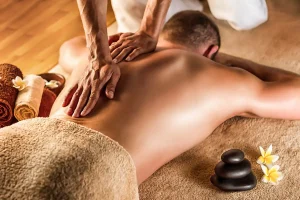
Two phrases carry most of the load. “Nhẹ hơn” and “mạnh hơn” settle the pressure question, and both can be repeated as often as needed without causing offence. “Đau” functions as a safety word; a therapist who hears it will ease off immediately, and no further explanation is expected. “Nóng quá” matters specifically during hot stone work, where stone temperature is set by the therapist and tolerance varies widely from one person to the next.
Booking a massage without speaking Vietnamese: why text beats a phone call
A phone call is the hardest possible format for two people working in a second language. Accents compress, background noise interferes, and neither side can pause to check a word. Text removes all three problems at once. Both parties can read slowly, run a translation, and keep a written record of what was agreed, which also settles any later disagreement about the time or the treatment.
One message covering six points rarely needs a follow-up:
- Name and number of people.
- Date and start time, written in 24-hour format to avoid an am/pm mix-up.
- Treatment and duration, copied exactly from the spa’s menu.
- Pressure preference in one short line, such as “medium to firm, please”.
- Anything the therapist should know, including recent injuries, surgery, high blood pressure or skin conditions.
- A request to confirm by return message.
Most spas in the area reply within minutes during opening hours. Siz Spa takes same-day requests on WhatsApp, and walk-ins are usually possible off-peak, though early evening is the busiest window across District 1 and a walk-in at that hour may have to wait or be turned away. The spa is open daily until late 10:15p.m . For a broader comparison of booking channels in the area, including what hotel concierges do and do not add, see the guide to booking a massage in District 1.
Non-verbal signals that work reliably
Much of a massage without speaking Vietnamese is conducted in gesture, and the working vocabulary is smaller than it first appears. Four signals cover nearly everything that comes up.
Pressure is the main one. A flat palm pressed downward, or a thumb pushed into the mattress, reads as more. A palm lifted slowly off the table reads as less. A small pinch between thumb and forefinger means a little, and pairing it with a word gets closer to “slightly lighter” than either signal manages alone.
Pointing beats describing every time. Tapping a spot on the shoulder blade, then tapping it again and holding the finger there, communicates focus here with no ambiguity. Laying a flat hand over an area and shaking the head communicates avoid this, which matters for a healing bruise, a sunburnt patch of shoulder or a recent tattoo.
Body response is the signal therapists read most closely, often more closely than speech. Flinching, a held breath or a shoulder lifting off the table all register immediately. Deliberately relaxing a limb after an adjustment is the clearest possible way to confirm that the new pressure is right, and it is worth doing consciously rather than assuming the therapist will guess.
One limitation deserves advance warning. Gestures made while face-down in the cradle are invisible, and a muffled comment into a padded ring rarely travels. Raising one hand a few centimetres off the table is the standard interruption, and every working therapist recognises it.
The two-minute conversation before the session starts
The conversation that prevents an unsatisfying hour happens before anyone lies down, and most of what makes a massage without speaking Vietnamese work happens inside it. Two minutes at the counter, or in the room while the therapist is still standing, is enough, and it is far easier than trying to renegotiate halfway through with oil on your back.
Four things are worth conveying. The first is pressure, ideally with a reference point rather than an adjective: naming a style, such as a shiatsu-type session with firm thumb and palm pressure, says more than the word strong. The second is one or two areas to prioritise, indicated by pointing. The third is anywhere to avoid, which is the item guests most often forget until it is too late. The fourth is whether conversation is welcome, since silence is the default in most District 1 treatment rooms and asking for it is unnecessary.
Deciding the length at this point prevents another common mismatch. A 60-minute full-body session leaves little room for extended work on a single area, so a request to spend twenty minutes on the neck has to come out of something else. The duration guide for District 1 sets out what realistically fits into 45, 60, 90 and 120 minutes.
Physical conditions help more than most guests expect. The treatment rooms at Siz Spa sit back from Cong Quynh, so street noise drops noticeably once the door closes, which means a normal speaking voice carries clearly and nobody has to compete with traffic while explaining a shoulder.
When a session is going wrong and words are not working
Stopping is always acceptable, and it is better than lying still for forty more minutes hoping the pressure changes. The polite form is short: sit up, say “xong rồi, cảm ơn”, smile, and dress. No explanation is required, and none should be demanded. A guest who prefers to escalate rather than end the session can ask for the front desk, where English is usually strongest, and request a change of pressure or, in some spas, a change of therapist.
Distinguishing discomfort from pain matters here. Firm pressure on a tight muscle can feel uncomfortable while remaining useful, and mild soreness the next day is common. Sharp pain, pain that radiates, or pain that persists after the session is a different signal, and the correct response is to stop rather than endure. The US National Center for Complementary and Integrative Health notes that massage appears to carry few risks for most healthy adults when performed by a trained practitioner, while also noting that it should not be painful. Spa treatments are wellness services, not medical care, and anything severe, worsening or lasting more than a few days belongs with a doctor.
Honesty about money helps too. A guest who stops early should generally expect to pay for the time booked. Some spas will adjust the bill, many will not, and treating an adjustment as a guarantee leads to a second, worse conversation at the counter. How a business handles that moment is informative in itself, and it overlaps closely with the other markers of a legitimate District 1 spa: posted prices, a real menu, a clean room and no pressure at the door.
An honest note on mismatched sessions
A massage without speaking Vietnamese occasionally produces a session that did not match the request, and no phrase list removes that risk entirely. Pressure preferences are subjective, therapists have different hands, and a quiet guest who answers “yes” to every check-in will sometimes get an hour that was technically competent and personally wrong. Accepting that as a possibility is more useful than assuming perfect transmission.
The simplest fix is also the least used: note who delivered a good session and ask for the same person next time. Most spas in the area identify therapists by a first name or a number at the counter, so a message reading “the same therapist as Tuesday at 16:00, please” is usually enough to arrange it. Repeat visits also compress the explaining. A therapist who already knows that a guest wants firm work on the upper back and nothing on the feet needs no conversation at all on the second visit.
Consistency has a cost. Requesting a specific therapist narrows the available times, and the better-known therapists book out first during the evening peak, so flexibility on the hour is the price of staying with one pair of hands. Older travellers in particular tend to find that returning to one spa in Saigon works better than sampling a new place each day, because mobility limits and pressure preferences only have to be explained once. Travellers choosing a first spa can start from a shortlist of the better-reviewed options in District 1, then stay with whichever one gets the pressure right.
Written notes travel further than spoken ones. The Siz Spa booking page accepts a note alongside a reservation, which is a practical place to record a pressure preference, a problem area or a therapist request before arrival, in writing, where nothing depends on pronunciation.
Frequently asked questions
Do spas in Vietnam speak English?
In District 1 and other tourist areas, mostly yes at reception, and often well enough at therapist level for a straightforward session. English fluency drops sharply in neighbourhood shops that serve residents rather than visitors. Expect booking, payment and basic instructions to work in English, and expect to use gestures or written phrases for anything more detailed, such as adjusting pressure on one specific area.
How do you ask for a stronger or softer massage in Vietnamese?
Say “mạnh hơn” (mahn hun) for stronger and “nhẹ hơn” (nyeh hun) for softer. Both are short, polite and widely understood. Pair the words with a gesture, palm pressing down for more and palm lifting for less, so the meaning lands even if the tones do not. Repeating the request later in the same session is normal and is not considered rude.
Is it rude to ask the therapist to change something mid-massage?
No. Adjusting pressure, temperature or focus mid-session is routine, and most therapists would rather hear a correction than deliver a silent, unsatisfying hour. The polite form is brief and matter-of-fact: the Vietnamese word, a gesture, a thank you. Saying nothing and leaving unhappy is the outcome everyone wants to avoid, including the spa, whose business depends on repeat guests and reviews.
Can you book a massage in District 1 without speaking Vietnamese?
Yes. Nearly every spa serving travellers takes bookings in English by WhatsApp, Facebook message or an online form, and many reply within minutes. Writing the request rather than calling gives both sides time to read, translate and confirm. Include the date, start time, treatment, duration and number of people, then ask for a confirmation message back.
What should you say if a massage hurts?
Say “đau” (dow, rhyming with cow), or “nhẹ hơn” to ask for lighter pressure, and the therapist should ease off immediately. Discomfort that fades under the hand is common with firm pressure. Sharp, radiating or lasting pain is not, and it is a reason to stop the session. Soreness that persists for more than a couple of days is worth raising with a doctor.
Do translation apps work during a massage?
They work well before a session and awkwardly during one. Screens are hard to read face-down in a dim room, and reaching for a phone interrupts the work. Preparation is the better approach: save a screenshot of the key phrases and show it at the start, when the therapist is still standing. Voice translation is useful at the counter, much less so once the session is underway.
Can you request a female or male therapist without speaking Vietnamese?
Yes, and the request is easiest to make in writing at the time of booking. A single line such as “female therapist, please” in a WhatsApp or booking-form message is usually enough, and spas with a larger team can normally accommodate it given notice. During the evening peak the choice may be limited, so it is better to ask when reserving than on arrival.
How much Vietnamese do you actually need for a spa visit?
Very little. Roughly ten words cover a full session: softer, stronger, too hot, hurts, stop, finished, thank you. Everything else can be handled by pointing, gesture or a screenshot. Reading the written forms matters more than speaking them, since showing a phrase on a phone screen avoids the tone problem that defeats most first attempts at spoken Vietnamese.
Emma Nguyễn is a travel and wellness writer based in Ho Chi Minh City. She is passionate about exploring local spa gems and sharing authentic relaxation experiences with travelers.
What Our Clients Say About Us
Discover why SIZ Spa is a trusted destination for relaxation and rejuvenation, through the voices of our valued clients.
Trustindex xác minh rằng nguồn đánh giá ban đầu là Google. とってもリフレッシュできました! 髪もサラサラになるので、アロマオイルマッサージと、ヘッドスパオススメです。Đăng trênTrustindex xác minh rằng nguồn đánh giá ban đầu là Google. 洗頭還好 按摩蠻舒服的Đăng trênTrustindex xác minh rằng nguồn đánh giá ban đầu là Google. Masseur is good. We have a relaxing massage. Reasonable priceĐăng trênTrustindex xác minh rằng nguồn đánh giá ban đầu là Google. Had an excellent 90 minutes body massage and hair wash package. Massage was on point and hair wash was totally relaxing.Đăng trênTrustindex xác minh rằng nguồn đánh giá ban đầu là Google. After really long night, i needed some relaxation. This place was great i felt really good, and it was my first hair wash here in Vietnam. And it didnt disappoint. The guy was very gentle and sweet , i loved every moment. I leave the place feeling so much better ;) Thank you so muchĐăng trênTrustindex xác minh rằng nguồn đánh giá ban đầu là Google. ホットストーンがとても気持ち良かった。繊細なサービスで安心感があった。Đăng trênTrustindex xác minh rằng nguồn đánh giá ban đầu là Google. very soothing and relaxing.nice music and superb service.very patient!i wanna come again tomoro..must request hard level for the massage.Đăng trênTrustindex xác minh rằng nguồn đánh giá ban đầu là Google. מסאג' איכותי ומושקע שלא פוסח על שום מקום והשירות אדיב ומקצועי ויש מגוון גדול של עיסויים במחירים אטרקטיביים. ממליץ בחום. בנוסף, התה בתחילת וסיום העיסוי מעולה
Why Choose Us
A peaceful retreat where your body and mind find true harmony.
Blog Post
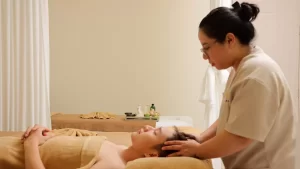
Massage Without Speaking Vietnamese: A District 1 Guide
How to get a massage without speaking Vietnamese in District 1, Saigon: key phrases, pressure signals, booking by text and what to do mid-session.
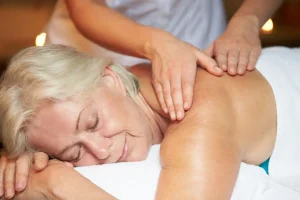
Massage for Older Travellers in Saigon: Comfort, Pressure and What to Ask For
Massage for older travellers in Saigon: which treatments suit, how to ask for lighter pressure, positioning options and what to tell the therapist.
Spa for Expats in Saigon: Rhythm, Cost and Etiquette for a Long Stay
How residents use a spa for expats Saigon: shorter sessions booked more often, realistic monthly costs at District 1 rates, and etiquette for regulars.
Massage Price Saigon vs Bangkok vs Bali: What an Hour Costs
Table of Contents A mid-range hour of massage costs broadly similar amounts in all three cities. On massage price Saigon vs Bangkok and Bali, Ho

Massage After a Walking Tour: 7 Fixes for Sore Legs
Booking a massage after a walking tour in Saigon? Here is which treatment suits which ache, when to go, and what a Cu Chi or Mekong day really does to you.
Layover Massage in Ho Chi Minh City: A Smart 6-Hour Plan
Long stopover at Tan Son Nhat? This layover massage in Ho Chi Minh City plan covers the timings, transfer times, luggage and which treatment fits your window.