Table of Contents
Massage for older travellers is, in most cases, straightforward. The adjustments that matter are pressure, positioning, and getting on and off the table comfortably. A short conversation before the session handles all three. Age on its own rules out very little; it changes which treatment makes sense, how firm the work should be, and how long to book.
The three adjustments that make the difference
Pressure is the first. Spa menus in central Ho Chi Minh City are written for a general audience, and the unspoken default on a full-body treatment is moderate to firm. That default is a starting point rather than a prescription. Asking for lighter work at the beginning of a session is ordinary, and therapists in the tourist core hear the request several times a day.
Positioning is the second. A standard session moves between face-down and face-up, with a stretch of twenty to thirty minutes spent prone. That is uncomfortable for anyone with a stiff neck, a shoulder that does not rotate freely, or breathing that is easier upright. Side-lying work with pillows under the knee and arm is a long-established alternative, and most of the back, hip and shoulder can be reached that way.
Access is the third, and the one travellers tend not to raise. Treatment tables in Vietnamese spas sit at roughly hip height and are firm rather than soft. Climbing on is easy enough; getting down after sixty minutes of warm oil and low light is where people wobble. Asking the therapist to stay in the room and offer a hand is a reasonable request, not an imposition.
None of this requires a specialist clinic or a treatment sold as a massage for older travellers. It requires three sentences at reception, which is why the rest of this guide is mostly about what to say and when to say it.
Why a long trip asks more of an older body
A holiday in Vietnam is physically demanding in ways that do not show up in the itinerary. The flight is the obvious part: long-haul seats hold the hips in flexion and the shoulders rounded for ten hours or more, and the stiffness that follows tends to settle in the lower back and the back of the neck. Recovery from that takes longer at seventy than at thirty, which is a statement about tissue, not about capability.
Heat compounds it. Ho Chi Minh City runs warm and humid year-round, and walking in that climate costs more effort than the same distance at home. Dehydration creeps up quietly, and tired legs swell. The Sleep Foundation’s overview of jet lag explains why the first two or three nights after arrival are often broken regardless of how tired a traveller feels, and broken sleep makes muscular aches feel worse than they are.
Pavements are the underrated factor. District 1 is walkable in the sense that distances are short, but the surfaces are uneven, kerbs are high, and parked motorbikes regularly push pedestrians into the road. Walking becomes a constant series of small corrections through the ankles, knees and hips. After a full day of that, calves and feet take the brunt.
Hotel beds finish the job. Firm mattresses are the norm in Vietnam, and a bed that suits one body punishes another. Several nights on an unfamiliar surface is a common reason travellers arrive at a spa with a specific complaint rather than a general wish to relax. Those who have just landed may find a jet-lag recovery plan a more useful starting point than a full-body session on day one.
Choosing a massage for older travellers: what tends to suit
Most spa menus in District 1 offer the same core treatments, and the useful question is not which is best but which asks least of the body while still doing something. The table below compares the five that come up most often, with the practical considerations rather than the marketing ones.
Treatment | Position needed | Pressure | Why it tends to suit | What to watch |
Foot massage | Seated upright, fully clothed | Light to firm, easy to adjust mid-session | No table to climb on or off; targets the legs and feet that take the most punishment | Firm thumb work on the sole can feel sharp where skin is thin or circulation is reduced |
Head, neck and shoulder | Seated, or face up on a table | Light to moderate | Reaches the areas most affected by flights, heavy bags and looking down at phones | Ask for minimal neck rotation if there is spinal hardware, dizziness on turning, or significant stiffness |
Aroma massage | Face down and face up, draped throughout | Light to moderate, oil-based | Slow flowing strokes with warm oil; the most forgiving full-body option | The face-down stretch; request a shorter one or a side-lying alternative before starting |
Signature full-body mix | Face down and face up | Moderate by default, adjustable on request | One session covering the whole body, with the therapist varying technique by area | It blends several styles, so state an upper limit on pressure clearly at the start |
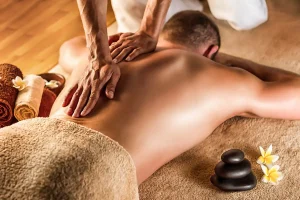
Hot stone | Mainly face down and face up | Light, with warmth doing most of the work | Heat eases stiff joints and cold-feeling hands and feet without heavy hands | Not appropriate where heat sensation is reduced, skin is fragile, or a doctor has advised against heat |
A foot massage is the sensible first booking for anyone unsure about the whole idea. Foot treatments in District 1 are normally done seated in a reclining chair with clothes on, nothing has to be negotiated beforehand, and the benefit after a day of walking is immediate and obvious. Many older travellers book one on arrival and a longer table treatment later in the trip, once they know the place.
For the upper body alone, a head, neck and shoulder treatment is short, specific and easy to stop early. Hot stone work deserves a flag rather than a recommendation: the warmth is genuinely helpful for stiff joints, but reduced sensitivity to heat is common with age and with several ordinary conditions, and a therapist cannot detect that from the outside. Anyone uncertain should say so and choose something else.
One seated option sits outside the usual five and is easy to overlook. The Vietnamese herbal hair wash, sold on local menus as a head spa, is carried out reclined with the head supported over a basin, and it combines a long scalp, neck and shoulder sequence with warm water and herbal infusions. No table is involved, nothing has to be removed beyond shoes, and the session can be stopped at any point. For a traveller who wants the effect of a massage without the logistics of one, it is a practical first visit. The caveat is the neck position: anyone with cervical spine problems, vertigo triggered by tilting the head back, or a history of dizziness should raise it at reception, because the basin position holds the neck slightly extended for several minutes at a time.
Positioning, bolsters and getting up from the table
Draping and positioning are the parts of a treatment most people assume are fixed. They are not. A bolster under the ankles takes pressure off the lower back when lying face down. A pillow under the knees does the same when face up. A folded towel under one shoulder opens the chest for anyone who finds lying flat on the back uncomfortable. Most established spas keep this equipment in the room, and therapists reach for it all day without being asked by younger guests who simply shift about until they are comfortable.
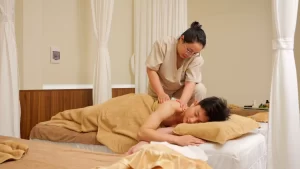
Side-lying is the option worth knowing about by name. The guest lies on one side with a pillow between the knees and another under the upper arm, and the therapist works the back, hips, shoulders and neck from behind. It is standard practice in massage training and is used whenever lying face down is impractical. For a hip replacement, a frozen shoulder, reflux, or breathing that is easier on one side, it is often more comfortable than the conventional sequence, and it costs nothing extra to request.
Table height is worth a question when booking a treatment for someone with a knee or hip that does not bend far. Some spas use fixed-height tables, some have adjustable ones, and a stool or step is usually available either way. Getting down is the moment that catches people out, because blood pressure drops slightly after lying still in a warm room. Sitting on the edge of the table for thirty seconds before standing solves most of it, and a hand to hold while doing so solves the rest. Therapists are used to offering both.
What to tell the therapist before the session starts
The pre-treatment conversation in a District 1 spa is usually brief and sometimes limited to a form. That is a reason to volunteer information rather than wait for the right question. Nothing on the list below is a diagnosis to be justified; each item simply changes how a therapist works, and saying it takes ten seconds.
Worth mentioning without being asked: blood thinners or any medication that causes easy bruising; surgery within the past six months and where the scar is; osteoporosis or a history of fractures; diabetes, particularly with any numbness in the feet; heart conditions, high or low blood pressure, and anything affecting circulation; skin that tears or bruises easily; a pacemaker or other implanted device; recent injuries, swelling or varicose veins; and any area a doctor has told you to protect.
Anyone with unexplained pain, persistent swelling in one leg, chest symptoms, new numbness or a fever should see a doctor rather than book a treatment. The same applies to anyone whose condition has changed since they left home. A spa therapist is not in a position to assess any of that, and a good one will decline rather than guess. Travel insurance details and the address of a nearby international clinic are worth having on the phone regardless, which is sound practice at any age.
Pressure: why firmer is not better with age
A persistent idea holds that a massage only works if it hurts. That belief causes more trouble among older travellers than among any other group. Skin thins with age. Capillaries sit closer to the surface and break more easily. Bone density falls, often without symptoms. Medication that thins the blood turns ordinary pressure into visible bruising that can take two weeks to clear. A very strong session is a poor choice in all of those circumstances, and the lack of soreness afterwards is not a sign the treatment failed.
What firm pressure is good for is a specific knot in a large muscle on a body that tolerates it. What lighter work is good for is almost everything else: circulation, stiffness, sleep, and the general sense of having been looked after. Slow strokes with warm oil, applied steadily, produce a better result in a massage for older travellers than anything described as strong.
Pressure is also easy to misjudge across a language gap. “Medium” means different things in different places, and a therapist asked whether the pressure is acceptable will often hear politeness rather than an answer. The practical fix is to set a ceiling at the start — “light pressure, please, and say before going firmer” — and then to speak up once during the session if it drifts. Saying “lighter, please” mid-treatment is normal and carries no awkwardness. For travellers who would rather settle the whole exchange in advance, getting a massage without speaking Vietnamese covers the phrases and message templates that work.
A gentle massage in Ho Chi Minh City costs the same as a firm one. Pressure is a setting rather than a tier, and established spas do not price it separately.
Session length: why 60 minutes often beats 90
Ninety minutes looks like better value and frequently is not. The limiting factor for most older travellers is not how long the body benefits from massage; it is how long one position stays comfortable. Thirty minutes face down is tolerable for many people and genuinely unpleasant for some, and a 90-minute full-body treatment usually involves a longer prone stretch rather than extra attention elsewhere. Lying still on a firm table for an hour and a half also stiffens the lower back in a way that undoes part of the point.
Sixty minutes covers a full body at a workable pace. Forty-five is enough for a focused treatment on the neck, shoulders and upper back, or for feet and lower legs. A better use of a bigger budget is often two shorter sessions on different days rather than one long one, because the second appointment benefits from everything learned in the first: the right pressure, the right position, the right therapist. The trade-offs across each duration are set out in a separate guide to choosing a massage length in District 1.
Longer multi-treatment packages are a different proposition. They break a long booking into segments with changes of position, a break between treatments and often a change of room, which some travellers find more comfortable than a single continuous session. Others find three and a half hours in a spa simply too long a commitment on a holiday with a schedule. Both reactions are reasonable, and the honest advice is to try sixty minutes before committing to anything longer.
Stairs, lifts and getting in the door
Access is the question spa websites almost never answer, and the one that decides whether a booking works. Buildings in central Saigon are typically narrow and tall, which means treatment rooms are often on the first, second or third floor, and that older buildings frequently have stairs rather than a lift. Stairwells can be steep and the handrail is not always on the side a particular person needs. None of this is obvious from a map listing or a photograph of a reception desk.
The fix is to ask before booking rather than on arrival. Three questions cover it: is there a lift, are any treatment rooms on the ground floor, and how many steps are there from the street to reception. A spa that answers those directly is also a spa that will handle the rest of the appointment sensibly. One that is vague about it is worth skipping, because the answer is rarely vague for a good reason.
Siz Spa & Retreat sits at 154 Cong Quynh Street in the Pham Ngu Lao area, roughly five minutes on foot from Bui Vien Walking Street and eight to ten minutes from Ben Thanh Market. The neighbourhood was redrawn on 1 July 2025 and the address now falls in Ben Thanh Ward, though almost everyone still calls it District 1 and maps still recognise the older name; Vietcetera’s guide to the city’s merged administrative map explains the change for anyone confused by two different addresses for the same building.
Treatments there run in private treatment rooms, and the therapists speak English, which takes most of the friction out of the pressure-and-positioning conversation described above. That matters more for this group than for most, because the adjustments only happen if they can be asked for and understood.
Taxis and ride-hailing cars can stop close to the door on Cong Quynh, which counts for more than walking distance for anyone who tires over a few hundred metres in the heat. Arriving by car and covering the last few paces on foot is a perfectly reasonable plan.
Booking a massage for older travellers in District 1
Booking ahead is worth the small effort, mainly because it converts the awkward requests into written ones. A message sent a few hours ahead can set out everything that matters before anyone is standing at a reception desk trying to explain it out loud.
A workable message runs to four lines: the treatment and duration wanted, the time, any preference about the therapist, and the adjustments needed. For example: one person, 60-minute aroma massage at 4pm, light pressure throughout, and a short face-down section or a side-lying option if possible. Spas handle this sort of request routinely. The full process, including what happens on arrival and what to expect at payment, is set out in how to book a massage in District 1 , and an overview of the area’s spas is a reasonable starting point for comparing venues.
On price, District 1 spas typically charge somewhere between roughly 200,000 and 1,250,000 VND depending on the venue, the treatment and the duration. Street-level foot massage shops sit at the lower end; long multi-treatment packages at established spas sit at the upper end.
Bookings and questions go through WhatsApp on +84 775 271 878 or the booking page. Asking about access, pressure and positioning at that stage is normal and changes nothing about how a guest is treated on arrival.
Frequently asked questions
Is massage safe for older adults?
For most older adults, yes. Mayo Clinic and the National Center for Complementary and Integrative Health both describe massage as generally safe while flagging situations that need medical advice first, including blood-thinning medication, severe osteoporosis, a history of blood clots, recent fractures and open wounds. Age alone is not a contraindication. Specific conditions are, which is why the pre-treatment conversation matters more than the birth date.
What is the best massage for seniors in Vietnam?
A foot massage or a head, neck and shoulder treatment is the easiest starting point, because both are done seated and fully clothed with no table to climb on or off. For a full-body session, an aroma massage at light to moderate pressure is the most forgiving option. Hot stone suits stiff joints but is unsuitable for anyone with reduced heat sensation or fragile skin.
Can you get a massage with limited mobility?
Usually yes, with adjustments. A massage with limited mobility is normally handled by working in a side-lying position with pillows supporting the knee and arm, or by choosing a seated treatment such as foot or head and shoulder work. Mention the specific limitation when booking rather than on arrival, and ask about stairs and lifts at the same time, since building access is often the real obstacle.
Is it rude to ask for lighter pressure during a massage?
No. Therapists adjust pressure constantly and would far rather be told mid-session than discover afterwards that a guest endured an hour of discomfort. A clear instruction at the start — light pressure, and a warning before anything firmer — works better than answering yes when asked if the pressure is fine. A gentle massage in Ho Chi Minh City costs exactly the same as a firm one.
Should an older traveller book 60 minutes or 90?
Sixty is the better default. The limit is rarely how long a massage helps; it is how long one position stays comfortable, and a 90-minute treatment usually means a longer stretch lying face down. Sixty minutes covers the full body at a reasonable pace, and two shorter sessions on different days often work better than one long one.
Is hot stone massage safe for older travellers?
It depends on heat sensitivity rather than age. Warm stones ease stiff joints and cold-feeling hands and feet, which many older travellers find helpful. Reduced sensation to heat is common with diabetes, some circulation conditions and certain medications, and a therapist cannot detect it. Anyone unsure should choose a different treatment or ask a doctor before booking.
Do you have to lie face down for a massage?
No. Side-lying is a standard alternative taught in massage training, and most of the back, hips, shoulders and neck can be worked from that position. Seated treatments avoid the issue entirely. Say so when booking rather than once the session has started, so the therapist can plan the sequence instead of improvising halfway through.
Should you tell the spa about medication before booking?
Yes, in general terms. Blood thinners, steroids and anything that causes easy bruising change how firmly a therapist should work, and recent surgery changes which areas are avoided. A single sentence in the booking message is enough. Anyone with a condition that has changed recently, or with new unexplained symptoms, should speak to a doctor before booking rather than relying on a spa’s judgement.

Emma Nguyễn is a travel and wellness writer based in Ho Chi Minh City. She is passionate about exploring local spa gems and sharing authentic relaxation experiences with travelers.
What Our Clients Say About Us
Discover why SIZ Spa is a trusted destination for relaxation and rejuvenation, through the voices of our valued clients.
Trustindex xác minh rằng nguồn đánh giá ban đầu là Google. とってもリフレッシュできました! 髪もサラサラになるので、アロマオイルマッサージと、ヘッドスパオススメです。Đăng trênTrustindex xác minh rằng nguồn đánh giá ban đầu là Google. 洗頭還好 按摩蠻舒服的Đăng trênTrustindex xác minh rằng nguồn đánh giá ban đầu là Google. Masseur is good. We have a relaxing massage. Reasonable priceĐăng trênTrustindex xác minh rằng nguồn đánh giá ban đầu là Google. Had an excellent 90 minutes body massage and hair wash package. Massage was on point and hair wash was totally relaxing.Đăng trênTrustindex xác minh rằng nguồn đánh giá ban đầu là Google. After really long night, i needed some relaxation. This place was great i felt really good, and it was my first hair wash here in Vietnam. And it didnt disappoint. The guy was very gentle and sweet , i loved every moment. I leave the place feeling so much better ;) Thank you so muchĐăng trênTrustindex xác minh rằng nguồn đánh giá ban đầu là Google. ホットストーンがとても気持ち良かった。繊細なサービスで安心感があった。Đăng trênTrustindex xác minh rằng nguồn đánh giá ban đầu là Google. very soothing and relaxing.nice music and superb service.very patient!i wanna come again tomoro..must request hard level for the massage.Đăng trênTrustindex xác minh rằng nguồn đánh giá ban đầu là Google. מסאג' איכותי ומושקע שלא פוסח על שום מקום והשירות אדיב ומקצועי ויש מגוון גדול של עיסויים במחירים אטרקטיביים. ממליץ בחום. בנוסף, התה בתחילת וסיום העיסוי מעולה
Why Choose Us
A peaceful retreat where your body and mind find true harmony.
Blog Post
Massage Without Speaking Vietnamese: A District 1 Guide
How to get a massage without speaking Vietnamese in District 1, Saigon: key phrases, pressure signals, booking by text and what to do mid-session.
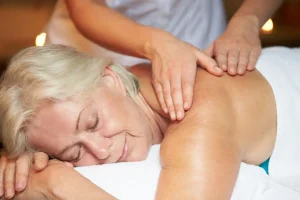
Massage for Older Travellers in Saigon: Comfort, Pressure and What to Ask For
Massage for older travellers in Saigon: which treatments suit, how to ask for lighter pressure, positioning options and what to tell the therapist.
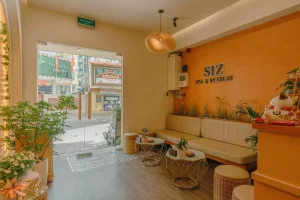
Spa for Expats in Saigon: Rhythm, Cost and Etiquette for a Long Stay
How residents use a spa for expats Saigon: shorter sessions booked more often, realistic monthly costs at District 1 rates, and etiquette for regulars.
Massage Price Saigon vs Bangkok vs Bali: What an Hour Costs
Table of Contents A mid-range hour of massage costs broadly similar amounts in all three cities. On massage price Saigon vs Bangkok and Bali, Ho

Massage After a Walking Tour: 7 Fixes for Sore Legs
Booking a massage after a walking tour in Saigon? Here is which treatment suits which ache, when to go, and what a Cu Chi or Mekong day really does to you.
Layover Massage in Ho Chi Minh City: A Smart 6-Hour Plan
Long stopover at Tan Son Nhat? This layover massage in Ho Chi Minh City plan covers the timings, transfer times, luggage and which treatment fits your window.