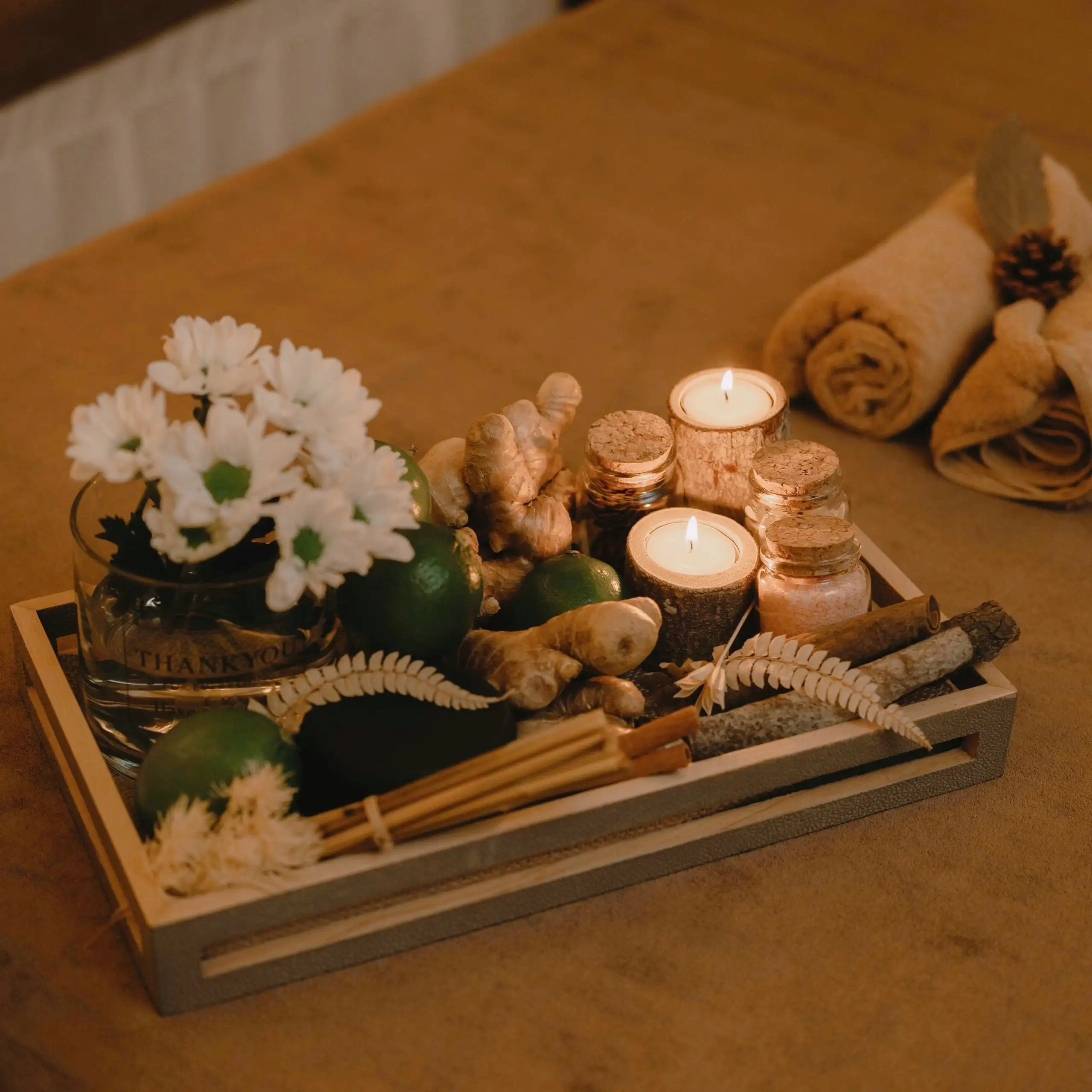
An aroma massage is a slow, full-body oil massage in which the therapist works with a scented blend chosen before the treatment begins. Sessions of aroma massage in District 1 usually run 60 or 90 minutes, stay in the light-to-medium pressure range, and fall inside a local price band of roughly 200,000 to 1,250,000 VND depending on the venue and the length booked.
The style is popular with visitors for a plain reason: it asks almost nothing of the person on the table. There is no stretching to follow, no pressure to negotiate halfway through, and no technique to learn. What differs from spa to spa is the quality of the oil, the length of the sequence, and how much of the hour goes to any one part of the body. This guide sets out what the treatment involves, how the common oils are chosen, what the session looks like from a practical standpoint, and when another style on the District 1 massage menu would serve a visitor better.
Aroma Massage in District 1: What It Is and What It Costs
Every oil massage uses oil. What makes a treatment an aroma massage is that the oil carries a scent selected for the session — a small quantity of essential oil diluted into a neutral carrier such as grapeseed or fractionated coconut. Most spas present two or three blends at the start and let the guest smell each one before anything begins. A plain oil massage skips that step and uses whatever unscented oil the room keeps on the warmer.
The hands-on work is closest to the Swedish tradition: long gliding strokes along the back and limbs, circular kneading at the shoulders and hips, and a tempo that stays slow and even from first contact to last. Vietnamese spa menus tend to blend that inheritance with local technique, a subject covered in more detail in this comparison of Thai, Swedish and Vietnamese massage styles.
Pricing across the area varies more than most visitors expect. Massage treatments in District 1 run from roughly 200,000 VND at the cheapest street-level shops to about 1,250,000 VND at the upper end, and the figure is driven by the venue, the treatment and the duration rather than by any standard rate. Street-level foot massage sits at the bottom of that range. Two- and three-hour multi-treatment packages sit at the top, and a 60- or 90-minute oil session generally lands somewhere between the two. Current pricing at Siz Spa is 【điền: giá aroma massage 60 và 90 phút tại Siz Spa】.
How Aroma Massage Compares With Other Styles on a District 1 Menu
Spa menus in central Ho Chi Minh City tend to list six or eight treatments with descriptions that blur into one another. Four questions separate them usefully: how much oil is involved, how firm the pressure goes, how quickly the therapist moves, and what the session is built to achieve. The table below covers the four styles most often weighed against each other at Siz Spa.
| Treatment | Oil used | Pressure | Pace | Best suited to |
| Aroma massage | Scented blend over the whole body | Light to medium | Slow and continuous | Winding down, travel fatigue, anyone who dislikes strong pressure |
| Signature full-body mix | Oil, with some dry stretching | Medium, adjustable on request | Varied, shifts between techniques | A first visit, or one treatment that covers most bases |
| Hot stone | Oil plus heated stones | Light to medium; the heat does much of the work | Very slow | Stiff shoulders, guests who feel the air conditioning, deep rest |
| Shiatsu | Little or none | Firm and focused | Rhythmic, with sustained holds | Specific knots and anyone who wants real pressure |
Those categories overlap in practice. A therapist trained across several styles will borrow from one while delivering another — a little firm thumb work during an oil session, a few slow strokes to close a dry one. What the label really fixes is the default: the starting pressure, the pace and the tools. Guests who want something outside that default are far better off saying so in the first five minutes than mentioning it on the way out.
The Oils and What They Are Traditionally Chosen For
Oil selection in Vietnamese spas draws on a mix of imported aromatherapy convention and local kitchen and household habit. Five scents come up again and again on menus in the centre of the city.
Lemongrass is the most recognisably Vietnamese of the group. It runs through the cooking, the household cleaning and the herbal steam preparations families have used for generations, and its sharp citrus-herbal smell reads as fresh rather than sweet.
Lavender is the standard evening choice and the scent most tied to sleep in the aromatherapy tradition, which is why it dominates late bookings.
Sweet orange is light and uncomplicated. It suits guests who find floral or medicinal smells heavy, and it is a common daytime pick.
Eucalyptus is cooling and sharp, often requested by travellers with a blocked nose after a long flight or several days in air-conditioned rooms. It is also the most assertive of the five: it fills a room and stays there.
Ginger is warming, and comes up most often in cooler months or among guests who describe themselves as stiff rather than tense.
These associations are traditional and preference-based rather than medical. The US National Center for Complementary and Integrative Health’s overview of massage therapy describes the evidence base as limited, with the more consistent findings concerning short-term relaxation, mood and pain rather than the treatment of any specific condition. Research on essential oils in particular is thinner still. The practical conclusion is straightforward: choose the scent that appeals, because enjoying it for an hour is the dependable benefit and everything past that is uncertain.
Dilution keeps essential oils gentle on skin, and reactions are uncommon without being unheard of. Anyone with fragrance sensitivity, eczema, asthma triggered by strong smells or a history of skin reactions should raise it during the consultation and can ask for unscented carrier oil instead. Persistent headaches, sinus trouble or skin problems belong with a doctor rather than a spa. The blends currently stocked at Siz Spa are 【điền: danh sách tinh dầu hiện có tại Siz Spa】.
What Happens During an Aroma Massage Session
The sequence is fairly standardised across the district, and knowing it in advance removes most of the awkwardness of a first visit.
- Consultation. A short form covers injuries, recent surgery, allergies, pressure preference and any areas to leave alone. Therapists at Siz Spa speak English, so this exchange happens properly rather than through gestures.
- Oil selection. Two or three blends are offered to smell. There is no wrong answer; pick the one you would happily sit with for an hour.
- Changing and draping. Guests undress to their own comfort level in a private treatment room, with disposable underwear provided and towels covering everything not currently being worked on.
- Back and shoulders. This is usually the longest passage of the session, frequently close to a third of the total time.
- Legs, then arms. Long strokes run from ankle to hip and from wrist to shoulder, with slower circular work at the calves and forearms.
- Turning over. The front of the legs, the arms and the upper chest follow. The abdomen is included only if requested, and Siz Spa also offers belly massage as a treatment in its own right.
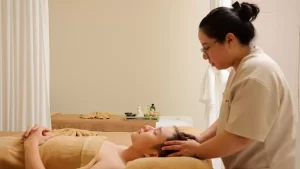
- Head, neck and scalp. A short closing passage, sometimes with a trace of oil at the temples and hairline.
- Finishing. Guests are left to sit up slowly and are usually offered water or tea before dressing.
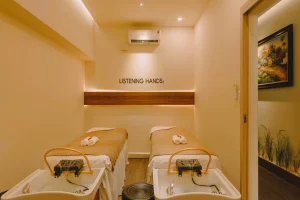
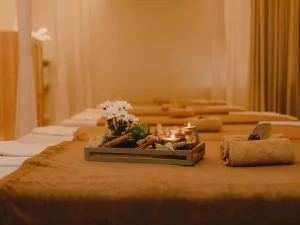
Continuity is the defining quality of the treatment. Hands stay in contact with the body through most of the hour, transitions between areas are smooth, and the rhythm does not spike. Falling asleep partway through is common and needs no apology. The treatment rooms at 154 Cong Quynh sit back from the street, so traffic noise drops noticeably once the door closes, which matters more than it sounds in this part of the city.
Pressure: Aroma Work Sits at the Lighter End
Aroma massage is a light-to-medium treatment by design, and that single fact is the most common source of disappointment among guests who booked it expecting something else. Oiled hands gliding across skin cannot deliver sustained static pressure into one point; the lubrication that makes the strokes feel continuous is the same thing that stops a therapist anchoring into a knot the way a dry style allows.
Therapists will increase firmness on request, and a good one asks about pressure within the first few minutes rather than at the end. There’s a ceiling, though. Anyone whose main goal is a specific tight shoulder, a stiff neck or the aftermath of three weeks under a backpack should book shiatsu [/shiatsu-massage-district-1/] instead, where firm thumb and palm pressure held over a point is the method rather than a concession.
Booking an oil treatment and then asking for maximum force throughout tends to produce the worst of both outcomes: not calm enough to be restful, not focused enough to help the problem. Sorting the choice out at the booking stage avoids it entirely. Massage is generally safe for healthy adults, although the Mayo Clinic overview lists conditions — bleeding disorders, fractures, severe osteoporosis and others — that warrant a conversation with a doctor first.
Practical Considerations: Oil, Clothing and the Scent That Follows You
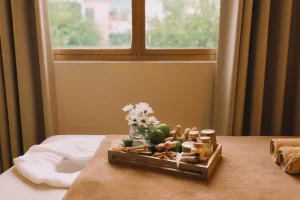
Oil is the part travellers most often forget to plan around. Therapists generally keep it off the scalp, but the hairline, the neck and the tops of the ears pick some up, and hair can look faintly damp for a few hours afterwards. Guests with an evening ahead can say at the outset that they would rather skip the head and neck work. The alternative is to lean into it and book a Vietnamese herbal hair wash, which ends with clean, dried hair rather than oiled.
Clothing deserves a thought before leaving the hotel. Oil transfers to fabric, and light linen, silk and pale cotton hold the mark. Loose, darker clothes are the sensible choice, and tight jeans over freshly oiled legs are genuinely unpleasant. A shower is worth delaying as well: most people leave the oil on for two or three hours so the skin takes it up, one of several small habits covered in the guide on what to do after a massage.
Scent lingers longer than first-timers expect. Essential oil stays detectable on skin for several hours and on clothing for longer, which makes an aroma massage a poor choice in the ninety minutes before a business meeting, a formal dinner or a long flight in a middle seat. The combination of a carrying smell, slightly shiny skin and the mild dopiness that follows a good session is not the impression most people are aiming for. Late afternoon or evening, with nothing scheduled afterwards, is where this treatment belongs.
Siz Spa sits at 154 Cong Quynh Street, roughly five minutes on foot from Bui Vien Walking Street and eight to ten minutes from Ben Thanh Market. The address moved into Ben Thanh Ward in the administrative reorganisation of 1 July 2025, though residents, drivers and mapping apps all still treat the area as District 1.
Who Books Aroma Massage, and Who Should Choose Something Else
Aroma massage in District 1 draws a fairly predictable set of guests. First-time spa visitors book it because nothing is demanded of them. Travellers landing off long-haul flights book it because a slow, even rhythm is easier to tolerate than stretching when the body clock is scrambled, although the Sleep Foundation’s jet lag guidance puts daylight exposure and meal timing well ahead of anything a spa can offer. Guests who dislike being pressed hard book it because it is the gentlest full-body option on most menus. Couples often pick it when they want the same treatment side by side without one person negotiating pressure while the other dozes.
For several groups it is the wrong booking. Anyone chasing a specific injury, or a knot that has not shifted in weeks, should choose a firmer style and accept that it will be less relaxing. Guests with fragrance sensitivity, active eczema or sunburn — a real risk after a few days on the Mekong or at Vung Tau — do better with an unscented treatment or with dry, clothed work. Pregnancy massage is not offered at Siz Spa, and anyone pregnant should speak to a doctor before booking any massage anywhere. Visitors with something important scheduled straight afterwards should move the appointment rather than compress it.
Duration Options and How They Change the Session
Length changes this treatment more than most people assume, because the sequence is fixed and the only real variable is how long the therapist can spend in each place. Siz Spa treatment times span 45 to 180 minutes, and the practical differences are easy to summarise.
- 45 minutes. A partial session: back, shoulders and legs, with the arms and head abbreviated or dropped. Reasonable as a top-up, less so as a first experience.
- 60 minutes. Full body, but the therapist keeps moving throughout, on the order of ten minutes per region.
- 90 minutes. The most commonly recommended length. Full body with room to spend longer on the back and feet without cutting time elsewhere.
- 120 minutes. Full body plus a properly extended passage over one or two areas, and the point at which most guests stop watching the clock.
Longer still are the multi-treatment packages. The Melt Away Journey and the Mission Impossible Relaxation Retreat, the latter running about three and a half hours, combine several treatments rather than stretching one, which is a different experience from simply booking more minutes of the same thing.
Booking follows the usual pattern for the neighbourhood. The spa is open daily until 【điền: giờ đóng cửa thực tế】, and walk-ins are often possible outside peak hours, though the early-evening window fills first and aroma massage in District 1 is in heaviest demand after dark. Same-day requests are handled over WhatsApp on +84 775 271 878, and anything planned further ahead can go through the booking page.
Frequently Asked Questions
How long should an aroma massage be?
Ninety minutes is the most useful default. Sixty minutes covers the whole body but keeps the therapist moving briskly, and 45 minutes is realistically a partial session. Ninety allows full-body coverage with extra time on the back, shoulders and feet. Two hours suits guests who want an extended passage on one area without losing the rest.
Which oil should you choose?
Choose the one that smells best to you. Lemongrass, lavender, sweet orange, eucalyptus and ginger each carry traditional associations — lavender with sleep, eucalyptus with a blocked nose, ginger with warmth — but these are cultural and preference-based rather than clinically established. The reliable benefit is spending an hour with a scent you enjoy, so trust your nose over the menu description.
Is aroma massage the same as aromatherapy massage?
In a spa context, yes. Both describe a full-body oil massage using essential oils diluted into a carrier oil and chosen at the start of the session. Menus in Ho Chi Minh City use the two names interchangeably. The difference between one spa and another is the quality of the oils and the length of the sequence, not the label.
Does an aroma massage use strong pressure?
No. Aroma massage sits at the light-to-medium end, and the oil that makes the strokes flow is the same thing that prevents a therapist holding firm pressure over one point. Therapists will work firmer on request, within limits. Anyone whose priority is a stubborn knot or a specific tight area should book shiatsu instead.
Will the oil ruin your hair and clothes?
Hair usually picks up a little oil at the hairline and looks slightly damp for a few hours, and oil does transfer to fabric. Loose, darker clothing avoids the problem, and light linen or silk is best left at the hotel. Guests going somewhere afterwards can ask the therapist to skip the head and neck entirely.
Should you shower straight after an aroma massage?
Most people wait two or three hours so the skin takes up the oil, then shower warm rather than hot. There is no harm in showering immediately if you have plans, but the scent and the softening effect will largely go with it. Drinking water and avoiding heavy exercise for the rest of the day is the usual advice.
Can you walk in, or is booking required?
Walk-ins are often possible outside peak hours, but early evening is the busiest window in this part of the city and rooms fill quickly. A same-day message on WhatsApp is usually enough to secure a slot a few hours ahead. Booking further in advance makes more sense for two people wanting to be treated at the same time.
Is aroma massage useful for jet lag or poor sleep?
Many travellers find a slow evening massage helps them settle, and the relaxation effect is one of the better-supported findings in massage research. It is not a treatment for a sleep disorder. Light exposure, meal timing and a consistent bedtime do more for jet lag, and persistent insomnia is worth raising with a doctor rather than a spa.

Solo Female Traveller Massage in Ho Chi Minh City: How to Book With Confidence
Solo female traveller massage Ho Chi Minh City: how to vet a spa, request a female therapist, understand draping and get back after dark.
Aroma Massage in District 1: Choosing Oils and What the Session Involves
What aroma massage in District 1 involves: choosing oils, the session step by step, how firm the pressure is, and what it costs in Ho Chi Minh City.
Massage in Saigon for Australian Travelers: Why Siz Spa Fits the Trip
Massage in Saigon for Australian travelers: relaxed, affordable, English-speaking therapists near Bui Vien, great after your flight. Book at Siz Spa
Best Massage in Ho Chi Minh City for Singaporeans
Massage in Ho Chi Minh City for Singaporeans: affordable, hygienic treatments with English-speaking therapists in District 1. Book your session.
Jet Lag Massage in Ho Chi Minh City: How to Recover Fast After a Long Flight
Jet lag massage in Ho Chi Minh City: ease flight fatigue and stiffness on arrival day with aromatherapy. Book your recovery session at Siz Spa
How to Find a Legit Massage Spa in District 1: A Saigon Safety Guide
Wondering how to find a legit massage spa in District 1? Learn the signs of a clean, reputable spa in Ho Chi Minh City and book with confidence