Is massage in Vietnam safe? Yes. For the great majority of visitors, a massage in Vietnam is safe, clean and exactly what was booked. The realistic risks are about money, not personal safety: an unclear price, a charge added at the end, or pressure to upgrade. Each one can be avoided with a short check before you sit down.
This guide sets out the seven money tricks travellers report most often and the fix for each. It then covers hygiene, health, your belongings and what to do if something goes wrong. It names no venues. The patterns matter more than the addresses.

Is massage in Vietnam safe? The short answer, by type of venue
| Where you book | Money risk | What to check |
|---|---|---|
| A hotel spa | Low. Prices are high but fixed | Whether the menu price has service charge and tax added on top |
| An independent spa with a website and posted prices | Low | That the price you saw online is the price on the menu |
| A walk-in shop with a menu at the door | Low to moderate | The hands-on time, and whether a fixed tip is expected |
| A place someone on the street led you to | Higher | You have no reason to follow. Choose your own venue |
Nearly every problem story starts in the last row. A spa that is confident in its prices wants you to read them before you walk in.
Seven common tricks, and the fix for each
| The trick | How it works | The fix |
|---|---|---|
| The flyer price | A leaflet shows a low price that applies to a short session or a limited hour. The menu inside is higher | Ask for the printed menu and point to the line you want |
| The compulsory tip | A fixed “tip” is mentioned only when you pay | Before you start, ask: “Is the tip included, or is there a fixed tip?” |
| The mid-session upgrade | Oil, hot stones or extra time are offered while you are lying down | “No, thank you. Just what I booked.” |
| The short hour | “60 minutes” includes changing and the foot wash | Ask if the time is hands-on, and note when the massage starts |
| Dollars instead of dong | The price is quoted in US dollars at a poor rate, or the card machine offers to charge your home currency | Ask for the price in dong, and choose dong on the card machine |
| The note mix-up | The 500,000 and 20,000 dong notes are both blue, and the wrong one changes hands | Count notes aloud as you pay, and keep large notes in a separate pocket |
| The commission ride | A driver or guide insists on “a better place” and the commission is built into your bill | Give the exact street address and decline alternatives |
None of these is dramatic, and none is unique to Vietnam. They share one feature. Something was left unsaid at the door and appeared on the bill. Thirty seconds of plain questions removes all seven.
Tipping deserves a separate word. A tip in Vietnam is customary and optional. For a 60-minute massage, 50,000 to 100,000 dong is the usual range, given in cash to the therapist. A number printed on the menu or announced at the till is a surcharge, whatever it is called. Add it to the price and compare again.
Hygiene: what good looks like
You can judge most of this from reception and the first minute in the room.
- Fresh linen for every guest. Sheets, towels and the face-cradle cover should be changed, not straightened.
- Clean hands. A therapist washes or sanitises before starting.
- Foot basins that are rinsed or lined. The foot wash on arrival should use a basin that was cleaned after the last guest.
- Sealed disposables. Disposable underwear comes in a sealed packet.
- Labelled products. Oils and scrubs are poured from labelled bottles, not from unmarked containers.
- Cleaned cups. If you book cupping, the cups are washed and disinfected between guests.
- A room that smells of nothing in particular. Heavy fragrance sometimes covers damp.
A spa that does these things usually does them in plain sight. If the room is not ready when you are shown in, it is reasonable to wait at reception while it is reset.
Health: when to speak up, and when to skip it
A massage is low risk for a healthy adult. The cases that need care are well known, and a professional spa asks about them on a health form before you start.
Tell reception or the therapist if any of these apply:
- You take blood-thinning medication or have a clotting disorder. Book light pressure only, and do not book cupping.
- You have had surgery or an injury recently. Ask your doctor first.
- One leg is swollen, hot or painful, especially after a long flight. See a doctor before any massage.
- You are sunburnt. No oil massage and no scrub over the burn.
- You are pregnant. Ask your doctor and tell the spa before you book, because not every treatment is suitable.
- You have been drinking. Come back when you are sober.
During the session, pain is not the goal. A strong ache that eases as it is worked is normal on a tight shoulder. Sharp or nervy pain is not. Say “soft” or “stop” at the moment you feel it. If words are the difficulty, Massage Without Speaking Vietnamese lists the few you need.
Your belongings and your privacy
Take only what you need for the evening. Leave your passport and spare cards in the hotel safe. In the spa, use the locker if there is one and keep the key on your wrist. If there is no locker, keep your phone and wallet in the treatment room with you.
You should be shown to a room or a curtained space, given time to change alone, and covered with a towel or sheet throughout. Only the area being worked on is uncovered. You can ask for a therapist of a particular gender when you book, and you can end a session at any point without giving a reason. A legitimate spa sells massage and nothing else. If staff hint at anything beyond the menu, decline and leave.
Women travelling alone will find a fuller set of booking tips in Solo Female Traveller Massage in Ho Chi Minh City.
Outside, the usual city habit applies. Bag and phone snatching by thieves on motorbikes is the street crime most often reported in tourist areas, according to the UK government’s Vietnam travel advice. Hold your phone on the building side of the pavement while you check the map.
If something goes wrong
- Say so at once, calmly. Ask for the manager. Most disputes end here, because a business with a storefront does not want a scene or a bad review.
- Pay what you agreed. If the bill differs from the menu, point to the menu line. A photo of the menu taken before you started settles most arguments.
- Keep a record. Photograph the bill and note the time.
- Ask your hotel to help. Reception staff can phone the spa and bridge the language gap.
- Use official channels for anything serious. The police emergency number in Vietnam is 113 and the ambulance number is 115. Your embassy or consulate can advise on next steps.
- Write a factual review afterwards. Dates, prices and what was said help the next traveller more than adjectives do.
How to choose well in the first place, with a door checklist for the streets around Bui Vien, is in How to Find a Legit Massage Spa in District 1.
Siz Spa & Retreat, at 154 Cong Quynh Street, publishes its menu and adds nothing at the end except a tip if you choose to leave one. Treatments take place in closed rooms, lockers are provided, and every guest fills in a short health card on arrival. Cash and cards are both accepted. The spa is open from 10:00 to 22:15 every day. Ask anything first on WhatsApp, or reserve on the booking page.
Frequently asked questions
Is massage in Vietnam safe for tourists?
Yes. Most visits are exactly as booked. The common problems are about money, such as unclear prices or added charges, and they are avoided by reading the menu and confirming the total before you start.
What are the common massage scams in Vietnam?
A low flyer price that does not match the menu, a fixed tip added at the till, upgrades offered during the session, a short hour, prices quoted in dollars, wrong change and drivers who steer you to a venue for commission.
How do I know a massage place is clean?
Look for fresh linen for each guest, a therapist who washes hands, sealed disposable underwear, labelled oils and a tidy room that is reset before you enter. These are visible in the first minute.
Is tipping mandatory at a massage in Vietnam?
No. A tip is customary and optional, usually 50,000 to 100,000 dong for an hour. A fixed amount demanded at the till is a surcharge and should be treated as part of the price.
What should I do if I am overcharged?
Ask for the manager, point to the menu price and pay what was agreed. Photograph the bill, ask your hotel for help if needed, and leave a factual review. For anything serious the police number is 113.
Is massage in Vietnam safe for a woman travelling alone?
Yes, at an established spa with posted prices. Book ahead, ask for a female therapist if you prefer one, and choose a venue you found yourself over one suggested on the street.
Written by Emma Nguyen, wellness and spa specialist at Siz Spa & Retreat.

Massage Near Saigon Centre and Takashimaya: Where to Go After Shopping (2026)
Massage near Saigon Centre and Takashimaya: walking times to the nearby spa areas, what to book after shopping, when to go and what to do with your bags.
Is Massage in Vietnam Safe? Scams, Hygiene and What to Check First (2026)
Is massage in Vietnam safe? Yes, with a few checks. Seven common massage scams and the fix for each, how to judge hygiene and when to skip a treatment.

호치민 공항 근처 마사지 완전 가이드: 픽업 여부·영업시간·1군까지 이동 시간
떤선녓 공항 안에 마사지가 있는지, 1군까지 실제 몇 분 걸리는지, 경유 시간별로 어떤 코스가 가능한지 정리했습니다.
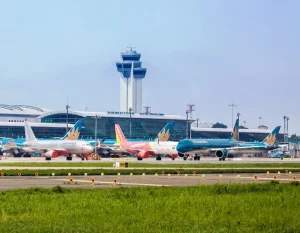
Massage Near Tan Son Nhat Airport: What’s Inside the Terminal, What’s Nearby, and a Smart 90-Minute Plan
What massage you can actually get inside SGN, what’s a 25-minute ride away in District 1, and how much layover time you really need. Honest 2026 guide.
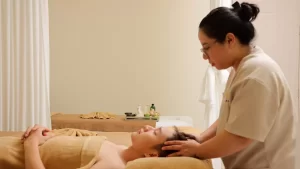
Massage Without Speaking Vietnamese: A District 1 Guide
How to get a massage without speaking Vietnamese in District 1, Saigon: key phrases, pressure signals, booking by text and what to do mid-session.