Booking your first Vietnamese massage is simpler than the menu makes it look. Most of the nerves people arrive with come down to three questions: what do I take off, what happens in the room, and how do I say “softer” when I do not speak Vietnamese. This guide answers all three, in order, so you can walk into any spa in District 1 knowing exactly how the next ninety minutes will go.
Quick answer: For your first Vietnamese massage, arrive about ten minutes early, pick a treatment and a duration, and change into the loose spa clothes provided (or disposable underwear if your treatment uses oil). You lie on a padded bed in a private or curtained room while a trained therapist works over 60 to 120 minutes. You can ask for lighter or firmer pressure at any moment, tea is usually served afterwards, and tipping is welcome but never demanded.
1. What a first Vietnamese massage actually involves
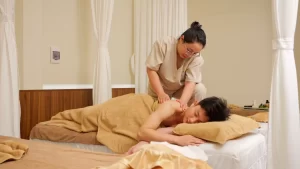
A Vietnamese massage is a hands-on treatment carried out by a trained therapist on a padded bed, usually in a room shared with nobody but you. Techniques vary by menu — long oil strokes, thumb pressure along the shoulders and back, assisted stretching, warm stones, or work through a cotton sheet with no oil at all.
What makes a first Vietnamese massage different from a spa visit at home is mostly the format, not the touch. Sessions run longer than the Western standard, hour-long slots are the shortest thing on most menus, and the price for a full hour in central Ho Chi Minh City sits far below what the same hour costs in Sydney, Seoul or London. Therapists here are generally trained across several styles at once, which is why a single treatment can move from oil strokes to elbow pressure to a stretch without ever feeling like three separate things.
The National Center for Complementary and Integrative Health has a plain-language summary of if you want the clinical view before you book.
2. What to wear, and what you take off
This is the question nobody wants to ask at reception, so here is the honest version.
For dry treatments — Thai-style work, Shiatsu, a foot massage, a head, neck and shoulders session — you keep your clothes on or change into the loose cotton top and trousers the spa hands you. Nothing comes off beyond your shoes and your watch.
For oil treatments — Signature, Aroma, Hot Stone, a body scrub — you undress to your underwear, or you use the disposable underwear provided, and you lie under a towel or sheet. The therapist uncovers only the section being worked on and covers it again before moving on. At no point in a proper first Vietnamese massage are you left lying uncovered.
Practical notes for your first Vietnamese massage:
- Leave jewellery, rings and watches in your bag or the locker; oil and metal do not mix.
- Skip heavy make-up if your treatment includes facial or head work.
- Tie long hair up unless you have booked a hair wash afterwards.
- If you are self-conscious, say so at reception. Asking for extra towel coverage is a completely normal request.
- Arrive fed but not full. A large meal in the hour before an abdominal or full-body session is uncomfortable.
3. Your first Vietnamese massage, step by step
Here is the sequence a first Vietnamese massage follows at a well-run spa in District 1, from the front door to the tea.
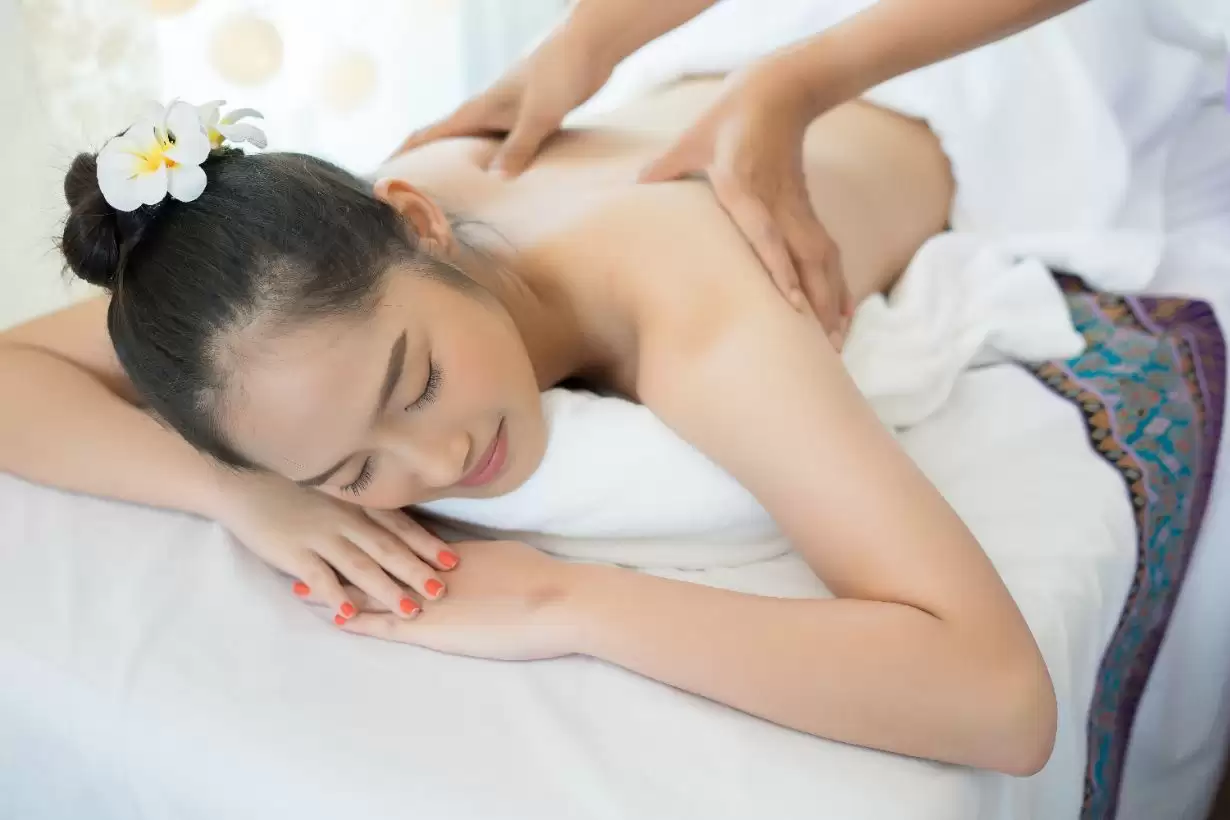
Arrival. You are greeted, your shoes come off, and your feet are usually washed or wiped in warm water. This is standard hospitality here, not an upsell.
The short form. You fill in a card covering injuries, pregnancy, recent surgery, allergies and pressure preference. Fill it in properly — it is the only chance your therapist has to know about the shoulder you dislocated last year.
Choosing. If you have not booked, reception walks you through the menu. Ask what is most popular, then ask what suits the problem you actually have. Those are often two different answers.
Changing. You are shown to a changing area or a private room, given spa clothing or disposable underwear, and left alone to change and get onto the bed under the sheet.
The treatment. Your therapist knocks before entering. Oil is warmed. Work usually starts face-down at the back and shoulders, moves down the legs, then you are asked to turn over. Speak up at any point.
Finishing. You are told the session has ended and left alone to sit up slowly and dress. Hot herbal tea or ginger tea is served in the lounge afterwards. Sit for five minutes rather than walking straight out into the traffic — standing up too quickly after a long session is the one thing that reliably makes people dizzy.
4. How to ask for the pressure you want
You do not need Vietnamese for this, and it is the single most useful thing to learn before a first Vietnamese massage. Therapists in tourist-facing spas in District 1 work with international guests all day and understand these words:
| What you want | What to say |
|---|---|
| Lighter | “Soft, please” or “lighter, please” |
| Firmer | “Strong, please” or “more pressure” |
| That spot hurts | “Pain” or “too strong” — say it immediately |
| Please stop there | “Stop, please” |
| That is perfect | “Good, thank you” |
Two rules make the whole thing work. First, say it the moment you feel it, not at the end when you are asked how it was — a therapist cannot fix an hour that is already over. Second, understand the difference between firm and painful. Firm pressure on a tight shoulder can feel like a strong ache that eases as it is worked. Sharp, bright or nervy pain is not that, and it is always correct to stop it.
Discomfort that lasts more than a day or two after a session is worth a conversation with a doctor rather than a return visit.
5. Which treatment to book the first time
For a genuine first Vietnamese massage, three options are hard to get wrong.
A signature or aroma oil massage is the safest introduction: full-body, adjustable pressure, no stretching, no surprises. If scent matters to you, our guide to covers the differences between the common blends.
A foot massage is the low-commitment option. You stay dressed, you sit in a reclining chair, and it is the ideal first booking after a day of walking. See the for the standard durations.
A herbal hair wash with head, neck and shoulder work is the most local of the three and the one most visitors are surprised by. Warm herbal steam, a long scalp massage, and no undressing at all. Details are on the .
Leave Thai-style stretching, four hands, and cupping for a second visit once you know how your body responds. You can see the complete menu with durations on the .
6. How long to book your first Vietnamese massage
Sixty minutes is the standard length for a first Vietnamese massage and it works. Ninety minutes is the length at which a therapist can properly cover your back, shoulders and legs without rushing any of them, and most people who book 60 the first time book 90 the second. Anything over two hours is best treated as a package rather than one long massage — see the or our full .
One thing worth knowing: booked minutes include changing, washing and settling. A “60-minute” slot is usually closer to 55 minutes of hands-on work.
7. Etiquette: phones, talking, lateness and tipping
Phones. Silent, face down, in your bag. Nobody will confiscate it, but a ringing phone ends the session for everyone in the room.
Talking. Entirely up to you. Vietnamese therapists generally follow the guest’s lead — quiet if you are quiet, chatty if you start it. Neither is rude.
Lateness. Arriving fifteen minutes late usually means fifteen minutes less on the bed, not a fifteen-minute extension, because the next guest is booked. Message ahead if traffic has caught you.
Tipping. Welcome, not compulsory, and usually given directly to the therapist in cash at the end. We cover the normal amounts in the .
Booking ahead. If your first Vietnamese massage falls on a weekend, book it. Evenings between 6pm and 9pm are the busiest hours in District 1. If you want a specific time or a specific therapist, message ahead — and WhatsApp both work.
8. Signs you are in the wrong kind of shop
Ho Chi Minh City has hundreds of genuine therapeutic spas and a small number of businesses trading on the same word. Your first Vietnamese massage should never involve any of the following:
- No printed menu, no listed durations, or a price that only appears after you sit down
- Staff waving you in off the street with a discount
- Windows blacked out with no visible reception area
- A therapist who does not confirm what you booked before starting
- Any suggestion during the session that the treatment can be changed for an extra fee
A spa suitable for a first Vietnamese massage publishes its menu, takes bookings by name, has a clean and lit reception, and has a long trail of public reviews. Our longer checklist is in , and solo travellers may also want .
9. Frequently asked questions
Do I have to be completely undressed for a first Vietnamese massage? No. Oil treatments are done in your own underwear or the disposable underwear provided, under a sheet or towel. Dry treatments such as Thai-style work, Shiatsu and foot massage are done fully clothed in loose spa clothing.
Will it hurt? It should not. Firm work on a tight area can ache in a way that eases; sharp pain should not happen. Say “soft, please” immediately and the pressure will change.
How much does a first Vietnamese massage cost in District 1? A 60-minute treatment in central Ho Chi Minh City typically falls in a band of roughly 400,000 to 700,000 VND, with 90-minute sessions and packages higher. Check the current menu before booking.
Should I shower before or after? Before, if you can. After an oil treatment many people prefer to leave the oil on the skin for a few hours, which is why a hair wash or scrub is often booked as the last item in a package rather than the first.
Can I book on the day? Often yes, especially before 5pm. Evenings and public holidays fill quickly, so message ahead if your time is fixed.
Is it safe to have a massage on your own? Yes, at a spa with a published menu, a real reception and verifiable reviews. Book by name, tell someone where you are, and choose a business with a street address rather than a doorway.
Can I get a massage if I am pregnant or recovering from an injury? Tell reception before you book. Many treatments can be adapted; some are not suitable at all. If you have a medical condition, a recent operation or an active injury, ask your doctor first.
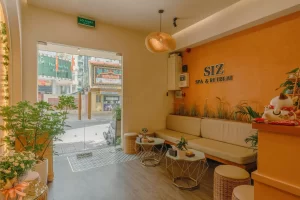
Ready for your first Vietnamese massage? Siz Spa is on Cong Quynh Street in District 1, a few minutes’ walk from Bui Vien and Pham Ngu Lao. or message us on WhatsApp
Spa for Expats in Saigon: Rhythm, Cost and Etiquette for a Long Stay
How residents use a spa for expats Saigon: shorter sessions booked more often, realistic monthly costs at District 1 rates, and etiquette for regulars.
Massage Price Saigon vs Bangkok vs Bali: What an Hour Costs
Table of Contents A mid-range hour of massage costs broadly similar amounts in all three cities. On massage price Saigon vs Bangkok and Bali, Ho

Massage After a Walking Tour: 7 Fixes for Sore Legs
Booking a massage after a walking tour in Saigon? Here is which treatment suits which ache, when to go, and what a Cu Chi or Mekong day really does to you.
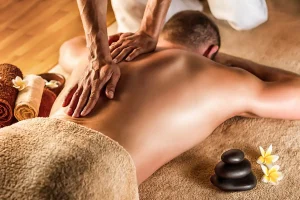
Layover Massage in Ho Chi Minh City: A Smart 6-Hour Plan
Long stopover at Tan Son Nhat? This layover massage in Ho Chi Minh City plan covers the timings, transfer times, luggage and which treatment fits your window.
Massage Package in District 1: Which One Fits Your Trip?
Choosing a massage package in District 1? Six combinations compared by trip length, travel companion and time available, with what each one actually includes.
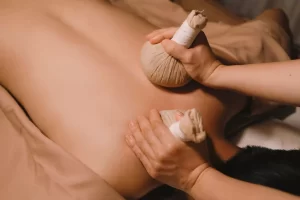
Herbal Compress Massage in Vietnam: 7 Things to Know First
A herbal compress massage uses steamed pouches of Vietnamese herbs and warm pressure. Here is what is inside them, how a 90-minute session runs and who it suits.