Booking a solo female traveller massage in Ho Chi Minh City is generally straightforward and safe at established spas. Treatments happen in private rooms, menus and prices are posted, and staff are used to women arriving alone. The care needed is mostly in choosing the venue and asking two or three questions before you arrive.
The short answer, and the checks that back it up
Central District 1 has a wide spa market. At one end are day spas with published menus, uniformed staff and treatment rooms behind doors. At the other are shopfronts that are not really selling what the sign outside says they sell. The gap between the two is usually visible from the pavement and confirmable in a two-message exchange before booking, which is why most women who plan a little have an entirely ordinary experience.
Safety, in this context, means something specific and fairly modest: the price quoted is the price charged, the treatment on the menu is the treatment given, the door of the room stays closed, the therapist keeps you covered, and the session ends when it is supposed to end. Those are service standards more than security measures, and a spa that gets them right rarely gets the bigger things wrong. A broader view of the treatments and venues available in the area is set out in this guide to massage in District 1.
Concern about this is reasonable rather than nervous, and it deserves a better response than generic reassurance. Most of what makes a solo female traveller massage in Ho Chi Minh City go well is decided before the appointment starts, in the choice of venue and in two or three lines of messaging. The rest of this guide covers what those checks are, what to say, and what to expect once the door closes.
What to Look For Before Booking a Solo Female Traveller Massage in Ho Chi Minh City
Six things separate a spa that will be fine from one that is a gamble, and all six can be checked from a phone before leaving the hotel. A posted menu with prices in Vietnamese dong is the strongest single signal, because a business that publishes its numbers has already decided not to renegotiate them once a guest is inside. Uniformed staff and a staffed reception desk point to a managed business with a rota. Private rooms with a door that closes matter more for oil-based full-body work than for a foot massage, where an open row of recliners is normal and perfectly fine.
Reviews are useful in a narrow way. Dated, recent, specific reviews that mention the treatment, the pressure and the room are worth far more than a high average score, and photographs taken by guests are worth more than photographs supplied by the spa. Communication is the last check and the one that predicts the others: a spa that answers a direct question directly, in a language you share, tends to run the appointment the same way. A fuller walkthrough of the warning signs sits in this guide to finding a legitimate spa in District 1.
| What to check | Why it matters | How to confirm in a minute |
| Uniformed staff and a reception desk | Indicates a managed business with a schedule | Guest photographs on the map listing |
| Private room with a door that closes | Standard for oil-based full-body treatments | Ask directly when booking |
| Published street address and hours | A venue with a fixed address can be found again | Map listing showing a house number, not just a street |
| Recent, dated, specific reviews | Describes the treatment rather than the marketing | Sort by newest and read five |
| Answers in a shared language | Predicts how the session itself will go | Send one question by message before booking |
Siz Spa & Retreat at 154 Cong Quynh Street clears these in a conventional way: published menu, fixed street address, private treatment rooms, English-speaking therapists. That is the baseline to expect from any established day spa in the tourist core rather than a distinction, and it is worth applying the same six checks to every venue on a shortlist.
What to Walk Past, and Why It Is Not Complicated
Some venues in the tourist core are not selling the treatment printed on the sign. The point here is practical rather than moral: the task is choosing a door, not judging an industry. The signals repeat themselves reliably. No menu visible from the street, or a menu with no prices on it. Someone standing on the pavement inviting passers-by inside, when established spas take bookings and do not recruit from the kerb. Opening hours that begin late in the evening and run into the small hours with nothing during the day. A price that will be discussed inside. Being invited to choose a therapist from a line-up for a full-body treatment rather than being assigned one by the schedule.
Small and plain is not the same as questionable. Plenty of modest foot massage shops in District 1 are ordinary businesses with a laminated price list by the door and a row of recliners in full view of the street, and that visibility is exactly the point. Polish is not the test. Transparency is. A quiet upstairs unit with a proper reception desk, a printed menu and a booking system is more predictable than a bright frontage with no prices anywhere on it.
One further note, because it saves time: if a venue is evasive over message about price or about who will carry out the treatment, that is a complete answer and there is no need to attend in order to confirm it. Walking on costs nothing. The area around Pham Ngu Lao and Cong Quynh is dense with spas, and the next few options are usually within a couple of hundred metres.
How to Request a Female Therapist, and When to Ask
Ask at the time of booking, not on arrival. Most spas in the area employ both male and female therapists and build the day’s roster around confirmed bookings, so a request made a few hours ahead is simply a scheduling matter. The same request made at the door depends on who happens to be free at that moment, which leaves two unattractive options: waiting, or accepting whoever is available.
A short message does the whole job. Something like “Hello, one person, 90-minute aroma massage today at 7pm, and a female therapist if possible” contains everything a spa needs to answer properly. The response to want is a direct one: a yes, or a clear alternative such as not at 7pm but 4pm is possible. Hedging at this stage is itself information. Note also that a four hands massage uses two therapists working at the same time, so the preference should be stated for both.
At Siz Spa, bookings and requests run through WhatsApp on +84 775 271 878 or the booking page, and therapist requests are handled when the booking is made rather than on arrival . Walk-ins are possible at quieter times of day, though a specific request is harder to accommodate that way. Timing, confirmations and what a good booking message contains are covered in this guide to booking a massage in District 1 .
What You Wear, and How Draping Actually Works
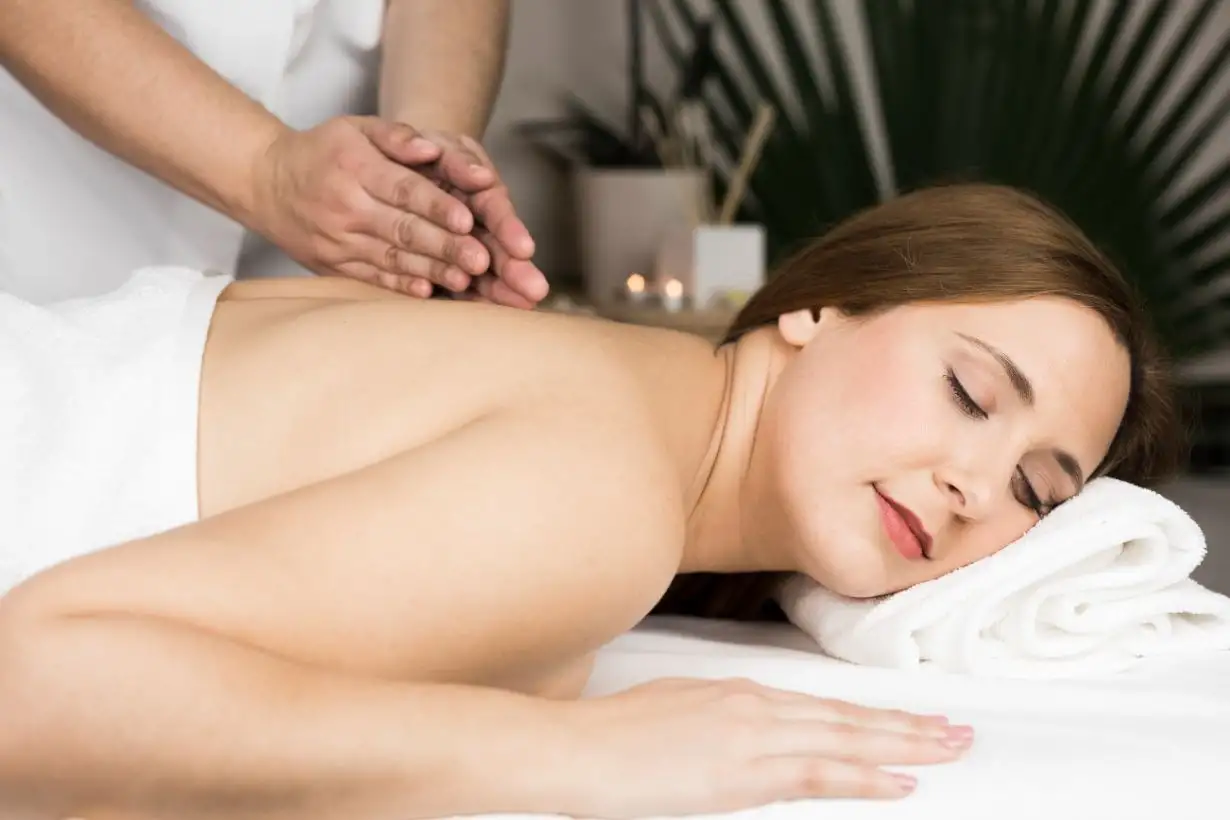
This is the most searched question on the subject and the least often answered, so here it is plainly. For oil-based treatments you undress to your underwear and stay covered by a towel or sheet for the whole session, except for the arm, leg or section being worked on at that moment. Underwear stays on. Many spas offer disposable underwear for guests who prefer it. You change alone with the door closed, and at an established spa the therapist knocks before coming back in.
For dry treatments the answer is simpler: you stay dressed. Shiatsu, Thai-style stretching, foot massage and head, neck and shoulder work are all done through loose cotton clothing, usually provided by the spa. The signature full-body mix blends Thai, Swedish, aroma and hot-stone elements and uses oil, so it follows the first pattern. Belly massage exposes the abdomen while the chest and hips stay draped. A body scrub involves more skin contact than a massage by definition, which is worth knowing at the booking stage rather than in the room.
Practical Arrangements Around the Appointment
Send the details to someone. The spa’s name, address and appointment time, in a message to a friend or a family member at home, takes ten seconds, and a booking thread on WhatsApp does most of it automatically while leaving a timestamped record. Telling the hotel front desk where you are going and roughly when you expect to be back is ordinary behaviour in an unfamiliar city rather than an over-reaction, and reception staff usually know the immediate neighbourhood better than any listing does.
Walking distance is the underrated variable. Siz Spa sits at 154 Cong Quynh Street, about five minutes on foot from Bui Vien Walking Street and eight to ten minutes from Ben Thanh Market, so the trip back after a long treatment is a short walk on lit streets rather than a negotiation with a driver. Other options in the same few blocks are compared in this look at spas near Bui Vien Walking Street . Older listings still give the address as Pham Ngu Lao Ward, District 1; since 1 July 2025 the official ward name has been Ben Thanh Ward, and nothing has physically moved, as this explainer on the city’s ward merger sets out.
Evening appointments are common, and the spa is open daily until late. After dark, book a car through a ride-hailing app rather than accepting an unmetered offer on the street, and keep in mind that a busy pavement is not automatically a careful one for a phone carried in an outside pocket. Which treatments suit the end of a long day is covered in this guide to late-night massage in the city. Allow a slow half hour afterwards for water and a light meal, along the lines described in what to do after a massage.
How to Ask for Less Pressure, or to Stop
Say it early and say it plainly. Lighter, please and too strong are understood at any spa in the tourist core, and therapists at venues used to international guests expect that feedback rather than taking it badly. In Vietnamese, nhẹ hơn means lighter, mạnh hơn means stronger, đau means that hurts, and dừng lại means stop. Therapists at Siz Spa speak English, so the vocabulary is a convenience rather than a requirement, though it travels well to smaller towns elsewhere in the country.
Pressure should register as firm, not as pain. Many people find that firm work across the shoulders and back leaves them looser and sleeping better afterwards, and while the research base is limited, it generally points to massage being low-risk when it stays within comfortable limits; the US National Center for Complementary and Integrative Health publishes a plain summary of what is and is not established. Mild soreness for a day is common. Sharp pain during a session is not, and pain that persists is a reason to see a doctor rather than to book another treatment.
Stopping a session is not a scene. A professional therapist treats stop as information, adjusts, and continues with the rest of the treatment, or ends it early without argument. If a request to change pressure or to avoid an area is ignored twice, getting dressed and settling the bill at the desk is a reasonable response, and a spa worth returning to will want to know why it happened.
What Varies Between Venues, and What to Do About a Bad Experience
Consistency is the honest limitation here. Even a well-run spa depends on which therapist is free at 8pm on a Saturday, and pressure, pace and talkativeness vary between individuals working in the same building. Two visits to one address can differ more than two visits to different spas. Booking ahead, naming the treatment and stating any preference narrows that variation without removing it, which is worth knowing before a first visit rather than after a disappointing one.
There are structural trade-offs as well. A boutique day spa with private rooms and English-speaking staff costs more than a street-front foot massage shop, and at peak evening hours it needs booking ahead. Siz Spa has no sauna, steam room, jacuzzi or pool, and does not send therapists to hotel rooms, so anyone wanting wet facilities or an in-room treatment should look elsewhere. What it offers instead is private treatment rooms, a menu of massages, facials and scrubs, and packages running up to about three and a half hours. None of this makes a solo female traveller massage in Ho Chi Minh City a gamble; it makes it a service, with the variability any service has.
If something does go wrong, say so before paying. Most problems are ordinary service failures, such as the wrong treatment, a room that was too cold or a therapist who ignored a request, and they are usually resolved at the desk while the details are fresh. A factual, dated review afterwards helps the next traveller more than a private complaint does. Anything that crosses a line is a different matter: accommodation staff can assist, serious incidents should be reported to the police, and most consulates publish guidance for citizens who need help while abroad.
Frequently Asked Questions
Is it safe for women to get a massage in Vietnam?
At established spas, generally yes. Treatments take place in private rooms, prices are posted, and staff are accustomed to women arriving on their own. The variable is the venue rather than the country. A spa with a published menu, a fixed address and recent reviews behaves predictably, while a shopfront with no prices and someone soliciting on the pavement is selling something else entirely.
How do you request a female therapist in Saigon?
Ask when booking, not on arrival. One line in a message or booking form covering the treatment, the time, the number of people and the request is enough, and spas build the day’s roster around it. Expect a direct yes or a clear alternative time. If the answer is vague, treat the vagueness as the answer. For a four hands massage, which uses two therapists, state the preference for both.
Are there women-only spas in Ho Chi Minh City?
Dedicated women-only venues are uncommon in central District 1. Most established spas treat all guests but do so in private rooms with the door closed, which addresses the same concern in practice. The more useful version of the request is a female therapist plus a private room, both confirmed at the time of booking rather than assumed on arrival. Foot massage areas are sometimes shared, so ask if that matters.
What do you wear during a massage in Vietnam?
For oil treatments, underwear only, with a towel or sheet covering everything except the area being worked on; disposable underwear is often available on request. For shiatsu, Thai-style stretching, foot massage or head, neck and shoulder work, you stay dressed in loose clothing the spa provides. You change alone with the door closed, and the therapist knocks before entering the room.
Is it safe to walk back to a hotel after an evening massage in District 1?
The streets around Pham Ngu Lao stay busy well into the night, and a walk of five to ten minutes on a lit road is unremarkable for the area. Choosing a spa within walking distance of the hotel removes the question altogether. After dark, use a ride-hailing app rather than an unmetered street offer, and keep a bag closed and carried in front.
How much does a massage cost in District 1?
Across District 1, treatments run roughly 200,000 to 1,250,000 VND depending on the spa, the treatment and the duration. Street-level foot massage sits at the lower end, and long multi-treatment packages at boutique spas sit at the top. A venue that will not quote a figure before arrival is the one to avoid, regardless of where its prices would eventually have landed.
Is tipping expected at a spa in Ho Chi Minh City?
Tipping is optional in Vietnam and is never demanded at a reputable spa. Many visitors leave a small amount in cash for the therapist at the end of a treatment they enjoyed, handed over directly rather than added to the bill. Declining to tip carries no consequence. If a venue applies pressure about it, that says more about the venue than about local custom.
What should you do if something during the treatment feels wrong?
Say stop. A professional therapist treats it as information and either adjusts immediately or ends the session without argument. If a request is ignored, get dressed, leave the room and settle the bill at the desk rather than negotiating inside. Report it to management, leave a factual review, and involve accommodation staff or the police if the behaviour went beyond poor service.

Solo Female Traveller Massage in Ho Chi Minh City: How to Book With Confidence
Solo female traveller massage Ho Chi Minh City: how to vet a spa, request a female therapist, understand draping and get back after dark.
Aroma Massage in District 1: Choosing Oils and What the Session Involves
What aroma massage in District 1 involves: choosing oils, the session step by step, how firm the pressure is, and what it costs in Ho Chi Minh City.
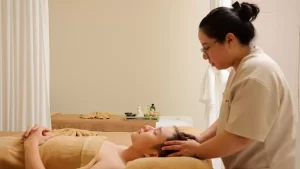
Massage in Saigon for Australian Travelers: Why Siz Spa Fits the Trip
Massage in Saigon for Australian travelers: relaxed, affordable, English-speaking therapists near Bui Vien, great after your flight. Book at Siz Spa
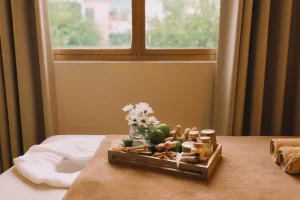
Best Massage in Ho Chi Minh City for Singaporeans
Massage in Ho Chi Minh City for Singaporeans: affordable, hygienic treatments with English-speaking therapists in District 1. Book your session.
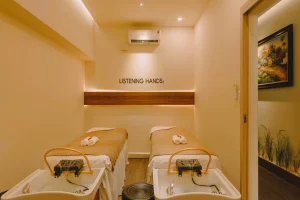
Jet Lag Massage in Ho Chi Minh City: How to Recover Fast After a Long Flight
Jet lag massage in Ho Chi Minh City: ease flight fatigue and stiffness on arrival day with aromatherapy. Book your recovery session at Siz Spa
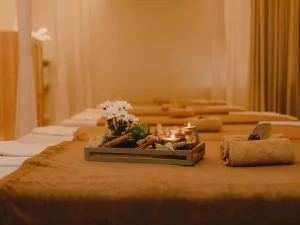
How to Find a Legit Massage Spa in District 1: A Saigon Safety Guide
Wondering how to find a legit massage spa in District 1? Learn the signs of a clean, reputable spa in Ho Chi Minh City and book with confidence